






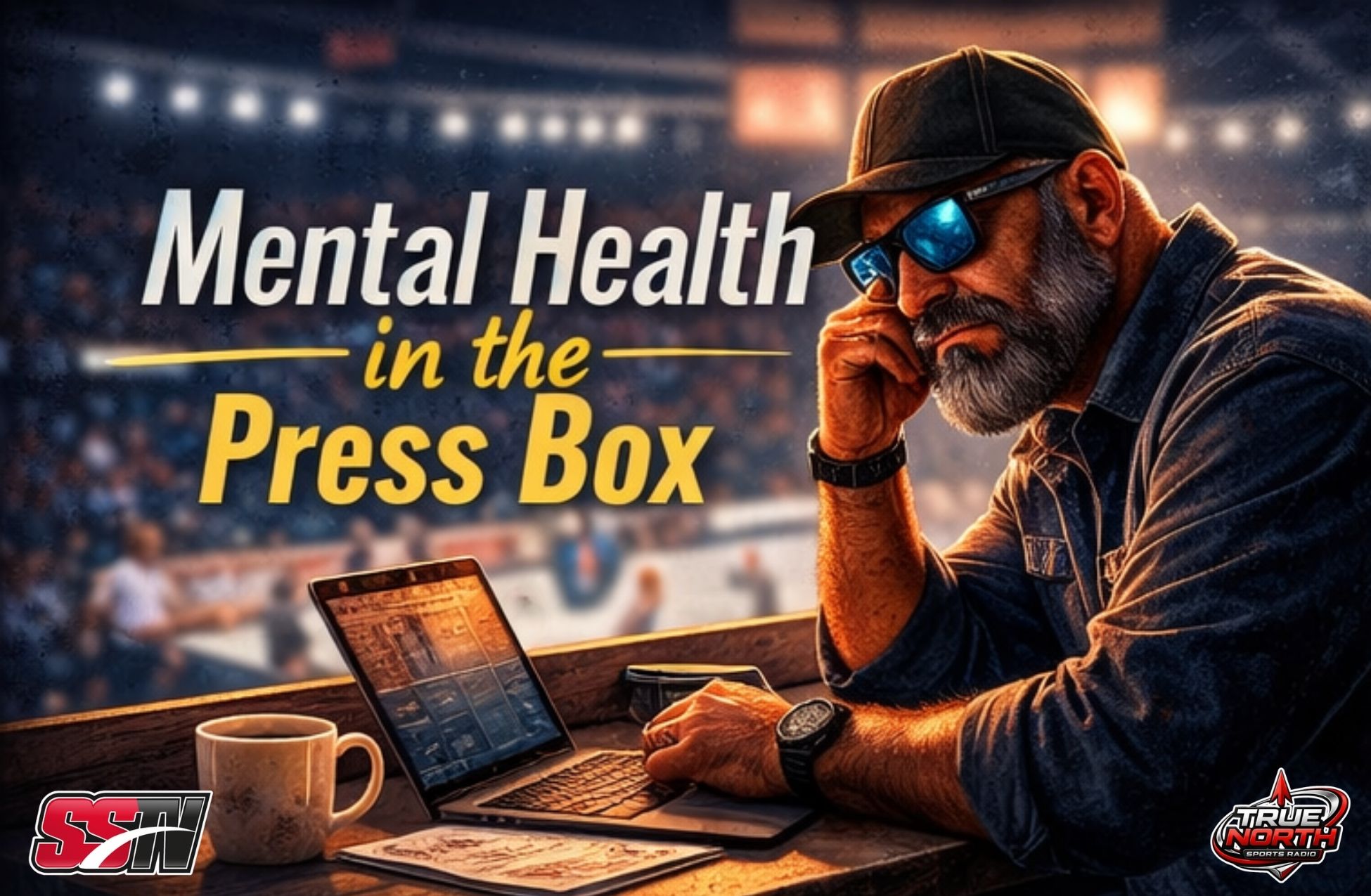
Living with mental health challenges isn’t something I talk about for sympathy—it’s just part of the reality I wake up to every day. Some mornings start clear, others feel heavy before I even get out of bed, and there’s no real pattern to it. Through the day, I can be doing everything I’m supposed to—working, talking, showing up—but there’s always that extra layer running in the background, making simple things take more effort than they should. It’s not always visible, and that’s the point—most people wouldn’t know unless I told them. I manage it, I work through it, and I keep moving forward, not looking for pity, just offering a glimpse into what day-to-day life can really feel like when your mind doesn’t always stay quiet.
At 55, the press box feels familiar—almost like a second home. The hum of conversation, the scratch of pens, the glow of laptop screens, and the distant echo of skates cutting across ice or cleats digging into turf—it’s a rhythm that has defined a decade and a half of life covering sports. On the surface, it’s a career built on passion, storytelling, and the thrill of the game. But beneath that surface, there’s another story unfolding every single day—one that doesn’t make headlines.
For many in sports media, the job is about more than just covering scores and highlights. It’s long hours, late nights, constant travel, and the pressure to always be “on.” For a 55-year-old who has spent a lifetime involved in sports, those pressures don’t fade—they evolve. Experience brings wisdom, but it can also bring weight. The accumulation of years, expectations, and personal battles doesn’t disappear when the game starts.
Mental health isn’t something you can leave at the arena doors.
Every morning begins with a quiet negotiation. Some days, motivation comes easily—the excitement of a big game, a compelling story, or the chance to connect with athletes and fans. Other days, it’s heavier. The same tasks feel overwhelming. Deadlines loom larger. The energy that once came naturally has to be fought for.
There’s a unique challenge in this line of work: you’re surrounded by energy, competition, and celebration, yet internally, you might be struggling just to keep pace. You’re expected to ask sharp questions, deliver insightful analysis, and capture the emotion of the moment—all while managing thoughts that don’t always cooperate.
Over time, you learn to adapt.
You build routines—small anchors in a chaotic schedule. A quiet French Vanilla coffee before heading to the rink. A walk after filing a story. Taking a moment in the press box to breathe, to reset. You learn the importance of stepping back, even when the industry rarely slows down. You begin to understand that taking care of your mind is just as critical as meeting your deadlines.
There’s also strength in perspective. Covering sports for a decade and a half means witnessing resilience up close—athletes battling back from injuries, teams overcoming adversity, individuals pushing through doubt. Those stories don’t just fill columns; they resonate. They remind you that struggle is part of the human experience, not a personal failure.
Still, it’s not always easy to talk about.
For many in this generation, mental health wasn’t a common conversation. You were taught to push through, to stay tough, to focus on the job. But times have changed, and so has the understanding of what it means to truly be strong. Speaking openly—even just a little—can lift some of the weight.
Colleagues become more than coworkers; they become a support system. A simple check-in, a shared laugh, or an honest conversation in a quiet moment can make a difference. The culture is slowly shifting, and that shift matters.
At 55, covering sports isn’t just about the games anymore. It’s about balance. It’s about recognizing limits while still embracing the passion that started it all. It’s about showing up—not perfectly, but consistently.
Because in the end, the job isn’t just to tell the stories on the field. It’s to live your own story with honesty, resilience, and the understanding that taking care of yourself is part of the journey.
And every day you show up—despite the challenges, despite the weight—you’re already winning in ways that never appear on the scoreboard.
