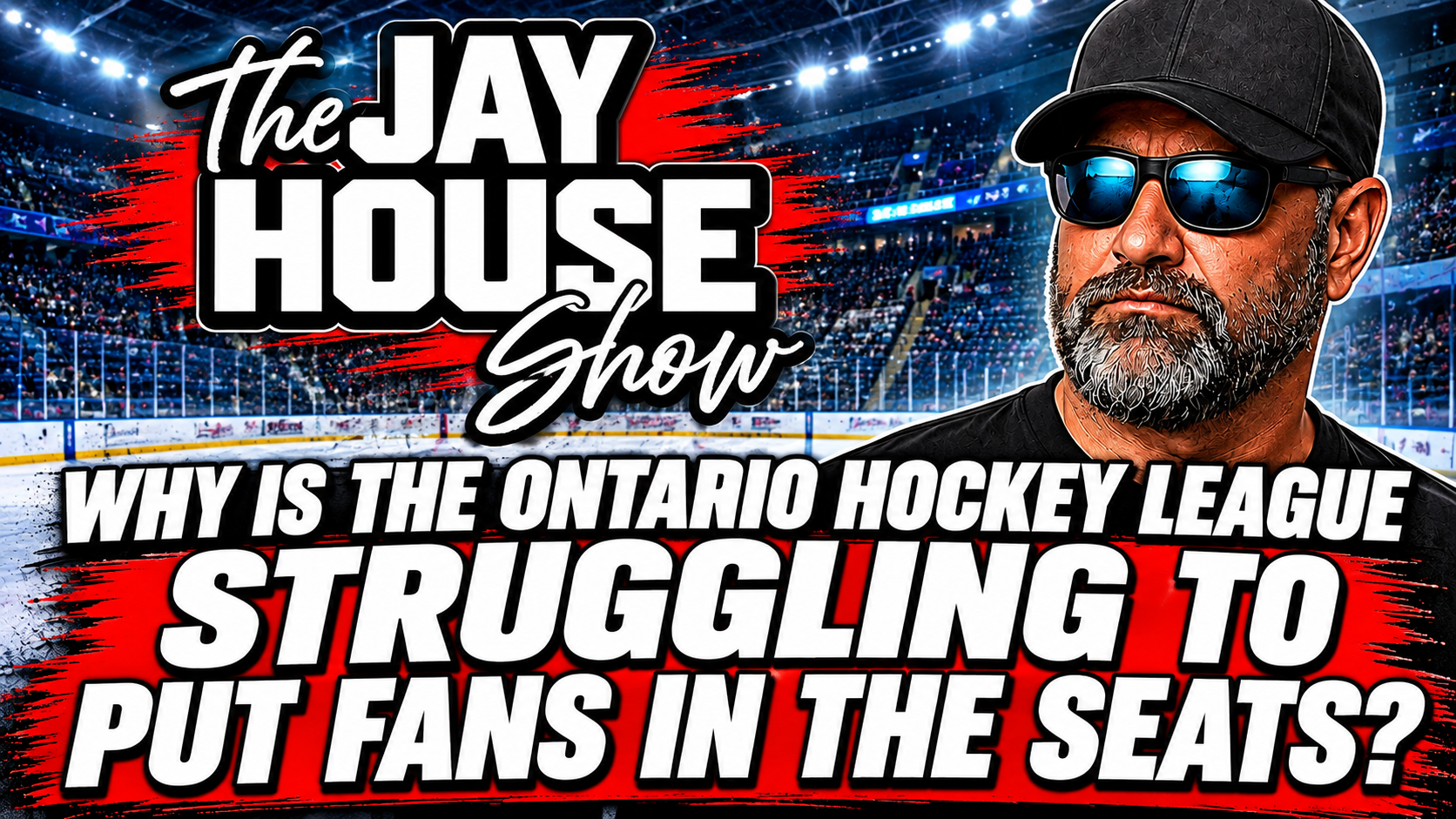
I (Jay Houslander) think the Ontario Hockey League (OHL) is facing a problem that goes much deeper than wins and losses. It is dealing with a changing sports-entertainment marketplace, rising costs for families, changing fan habits, and, in some markets, a disconnect between the product being presented and what today’s fans want.
The OHL still has tremendous hockey talent, passionate communities and a long history of developing NHL players. But having a good hockey product doesn’t automatically translate into people buying tickets.
There are several reasons why attendance is becoming a concern.
The cost of attending a game has changed.
This is probably one of the biggest challenges.
Families are making different entertainment decisions because of the cost of living.
A night at an OHL game can involve:
- Four tickets for a family
- Transportation
- Food and beverages
- Merchandise
- Additional expenses for children.
A family can quickly spend a substantial amount of money for a two-and-a-half-hour sporting event.
The OHL is competing not just against other hockey teams, but against movie nights, restaurants, streaming services, other sporting events and family activities.
The question isn’t simply whether people enjoy hockey. It’s whether they believe attending the game is worth the expense.
The OHL is competing with the NHL and other entertainment options. The modern sports fan has more choices than ever.
Fans can watch NHL hockey, professional sports, college sports and international competitions from home.
They can also follow individual players through social media, highlights and streaming services.
For some fans, watching hockey at home is more convenient than driving downtown, paying for parking and purchasing tickets.
The OHL needs to sell something that television and streaming cannot fully duplicate: the atmosphere, the community, the live experience and the opportunity to watch tomorrow’s NHL players develop.
Not every market has the same connection with its team
This is where the OHL needs to take a serious look at individual markets
Some organizations have tremendous community support. Others struggle to generate consistent interest.
Consider the differences between markets such as:
- London Knights — a strong hockey tradition and an established winning culture
- Kitchener Rangers — a strong regional following
- Owen Sound Attack — a smaller market that must continually build local support
- Brampton Steelheads — a market with considerable competition for entertainment dollars
Winning helps, but winning alone doesn’t build a sustainable fan base.
Organizations need to make their teams part of the community, not simply something that plays hockey several nights a week.
The league needs to sell its players and personalities
One thing I believe junior hockey can do a much better job of is telling stories.
Fans need reasons to care about the players.
Who is the local kid playing on the team? Who is the captain? Who is chasing an NHL opportunity? Who overcame adversity to earn a roster spot?
There are tremendous stories throughout the OHL, but too often the marketing revolves around the next game, the next opponent and the final score.
That is not enough.
Teams should be introducing players, featuring coaches, creating behind-the-scenes content and making fans feel connected to the people wearing the uniform.
The game-night experience needs to be better.
Fans aren’t just purchasing a hockey game anymore. They are purchasing an experience.
Organizations need to look at:
- In-arena entertainment
- Affordable family ticket packages
- Youth hockey nights
- School partnerships
- Local business involvement
- Interactive fan experiences
- Better pregame and postgame engagement.
The goal should be to make attending an OHL game an event that families look forward to, rather than simply another hockey game on the calendar.
The OHL needs to embrace local media and digital coverage
This is an area where I think the league and its individual franchises have considerable room to grow.
Local Media Coverage Matters
Local sports websites, radio, podcasts, independent broadcasters, community newspapers and social media creators can help connect teams with audiences that traditional team marketing might not reach.
Not everyone is going to purchase a ticket every weekend. But that doesn’t mean they cannot become a fan.
A person who watches highlights, listens to interviews, follows player stories and keeps up with the standings may eventually become someone who purchases tickets.
The mistake is thinking that digital viewers are competing with ticket buyers.
Digital coverage should be viewed as a pathway to ticket sales, sponsorship opportunities and stronger community relationships.
What do the attendance numbers actually tell us?
There is an important distinction here: the OHL is not universally losing fans. Some teams are doing exceptionally well.
The league announced an all-time attendance record of more than 3.2 million fans in 2024–25, including regular-season and playoff attendance.
However, 2025–26 regular-season figures show significant differences between markets.
OHL Markets
OHL team (Average attendance)
- London Knights 9,050 (9,100)
- Kitchener Rangers 6,761 (7,700)
- Oshawa Generals 5,381 (4,195)
- Windsor Spitfires 5,178 (6,500)
- Guelph Storm 4,555 (4,666)
- Erie Otters 4,063 (5,500)
- Ottawa 67’s 4,032 (9,862)
- Saginaw Spirit 3,881 (5,497)
- Soo Greyhounds 3,847 (5,000)
- Barrie Colts 3,580 (4,195)
- Peterborough Petes 3,490 (4,069)
- Sarnia Sting 3,462 (5,200)
- Sudbury Wolves 3,273 (5,100)
- Flint Firebirds 3,223 (4,400)
- Kingston Frontenacs 3,222 (5,380)
- Niagara IceDogs 3,156 (5,300)
- Brantford Bulldogs 2,981 (3,151)
- Owen Sound Attack 2,718 (3,500)
- North Bay Battalion 2,645 (4,246)
- Brampton Steelheads 2,238 (4,959)
Source: www.quanthockey.com/www.ohlarenaguide.com
The numbers suggest that the bigger issue is not necessarily the OHL brand itself. It is the ability of individual franchises to consistently attract their communities.
What I think the OHL should be doing differently
If I were advising the league and its individual franchises, I would recommend five priorities.
- Make hockey affordable. Develop family packages, youth team nights and more accessible ticket options.
- Build community relationships. Get players into schools, minor hockey associations, community events and local businesses.
- Invest in local storytelling. Give independent sports media, podcasters and broadcasters more opportunities to cover the teams and their players.
- Market the players, not just the games. Create personalities and recognizable stories that fans can follow throughout the season.
- Make every home game an event. Give people a reason to leave their homes and spend an evening at the arena.
Our biggest concern: The next generation of hockey fans.
This is where I think the OHL needs to pay particular attention.
Young people consume sports differently than previous generations. They discover athletes through short-form video, social media, YouTube, streaming and online communities.
If the OHL wants those young people to become season-ticket holders 10 years from now, it needs to establish those relationships today.
It cannot rely exclusively on generations of families who have traditionally attended junior hockey games.
My Final Thoughts
Having spent decades involved in hockey as a player, coach, manager and sports media operator, I believe junior hockey needs to recognize that putting a competitive team on the ice is only one part of operating a successful hockey organization.
The other part is building an audience.
The OHL has an outstanding product. It has future NHL players, community rivalries, local heroes and some of the best hockey development in the world.
But talent doesn’t automatically sell tickets.
Organizations need to become better at marketing, storytelling, community engagement and understanding how people consume sports today.
And perhaps the biggest lesson is this:
You cannot expect fans to support something they don’t feel connected to. You have to give them a reason to care before you can expect them to buy a ticket.
I believe this is an important conversation for the OHL, the NOJHL, junior hockey organizations and minor hockey programs across Northern Ontario.